Phishlurexor
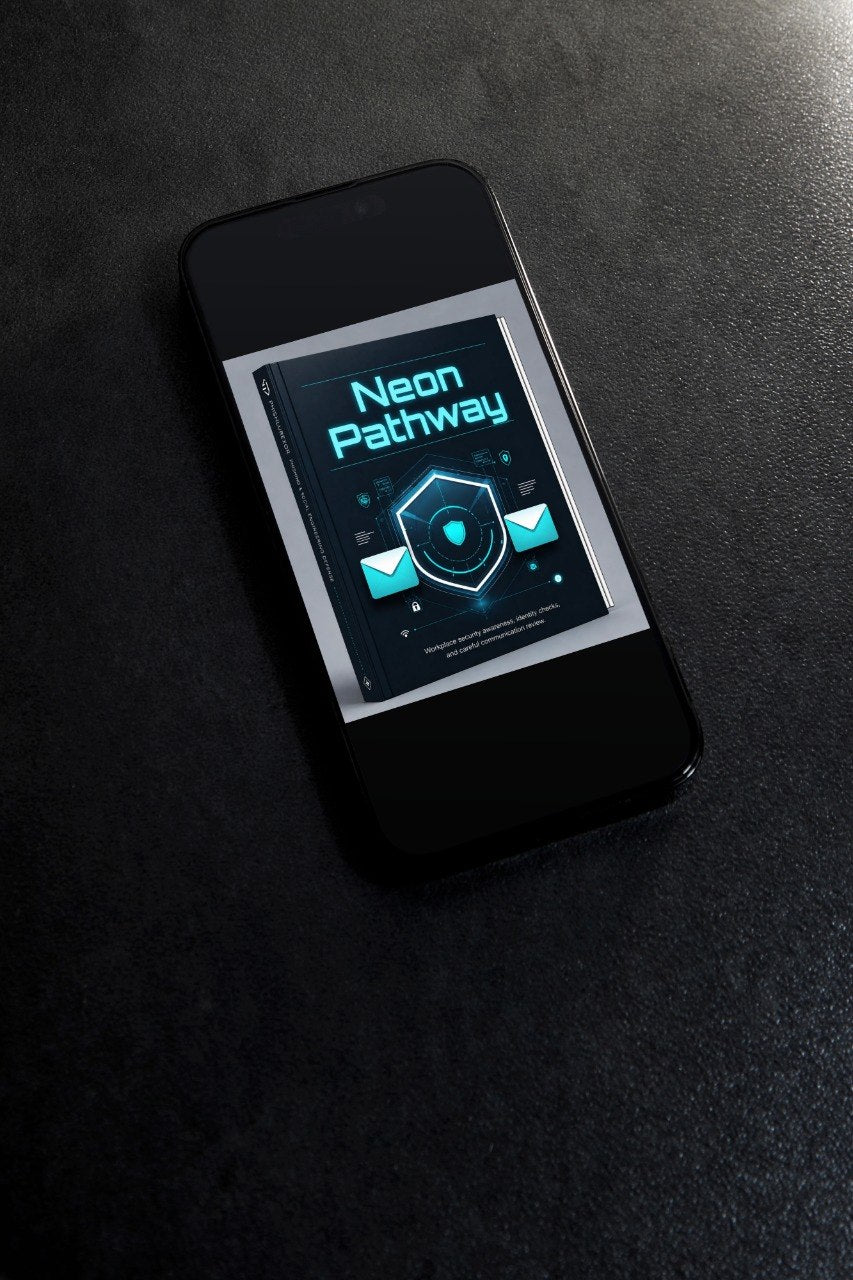
Neon Pathway
Neon Pathway
Couldn't load pickup availability
- 📚 Digital file available after purchase
- 🗂️ Long-term availability
- 🔐 Secure checkout
- 🗓️ Content updated in 2026
Self-paced learning overview
Problem Statement
More advanced phishing and social engineering attempts may not rely on obvious warning signs. They can appear polished, calm, and closely connected to everyday workplace activity. A message may include familiar language, a believable reason, a normal-looking request, and timing that feels reasonable at first. The concern often appears only after several details are reviewed together. Learners may need to evaluate identity claims, request purpose, timing, information sensitivity, action steps, and internal procedures all at once. Without a structured pathway, complex communication can feel difficult to judge, especially when the message is written to appear ordinary.
Solution
Neon Pathway gives learners a detailed review process for examining layered communication. The course helps users connect multiple review points into one practical decision path. Learners study how to inspect sender details, compare requests with expected procedures, notice pressure cues, review information boundaries, and decide when a message should be checked through internal channels. The focus is not on fear or strong claims. Instead, this tier supports careful thinking, structured observation, and steady response habits for complex workplace situations.
What’s Inside
This tier includes advanced learning materials, detailed message examples, scenario-based review tasks, communication pathway exercises, and decision checkpoints. Learners explore how deceptive communication can use trust, routine, authority, timing, and gradual request changes. The materials cover multi-step message review, identity verification habits, sensitive information handling, unusual attachment or link references, unexpected process changes, and internal reporting clarity. Neon Pathway also includes exercises that ask learners to examine a communication from several angles before choosing the next step.
Who is this for?
Neon Pathway is for learners who have completed earlier tiers or already understand the basic and intermediate ideas of phishing defense. It is suitable for staff members who review frequent communication, handle approvals, manage shared resources, support internal processes, or guide team awareness. It also fits organizations that want a more detailed course tier for deeper internal security training.
What You’ll Learn
- How to review complex phishing and social engineering scenarios
- How to connect sender identity, timing, tone, request purpose, and action steps
- How to identify layered warning signs that may not stand out alone
- How to evaluate requests involving sensitive information or process changes
- How to notice trust cues, authority cues, and gradual request shifts
- How to compare a communication with expected internal procedures
- How to create a clear decision path before replying or sharing materials
- How to report uncertain communication with useful context and observations
Guarantee
This tier includes a 30-day money back option for eligible purchases according to the store refund policy. It is presented as a risk-free final pathway for learners who want time to review the materials and decide whether the course structure fits their study needs.
Share
What is included in each course tier?
What is included in each course tier?
Each tier includes structured learning materials focused on phishing and social engineering defense. The materials may cover message review, identity checks, suspicious request patterns, reporting habits, and safer communication decisions.
Do I need prior cybersecurity knowledge?
Do I need prior cybersecurity knowledge?
No prior cybersecurity background is required. The courses are written for learners who want clear explanations, practical examples, and step-by-step security awareness training.
How are the tiers different from each other?
How are the tiers different from each other?
The tiers are arranged in ascending order, starting with introductory materials and moving toward more detailed learning paths. Higher tiers may include deeper scenarios, broader topic coverage, and more structured review activities.